


Installing the Kali Linux VM: Enhance Your Cybersecurity Skills With VMware Workstation.
Introduction The easiest way to install Kali is on a VM. The first thing that you want to do so go to the Offensive Security website and download the Kali VM for either a VMware workstation or Virtual Box. Installing Kali on a VM allows you to be more flexible with your installation by providing snapshots. Snapshots allow you to roll backward if necessary and ensure that your installation is behind Network Access Translation (NAT). This separates your attack box from your production network. Go here: https://www.kali.org/get-kali/#kali-platfInstroductiorms Download Kali As soon as you get to the Kali Web page, click the download button. Choose Your Installation Type We want to download the virtual machine version of Kali. So go ahead
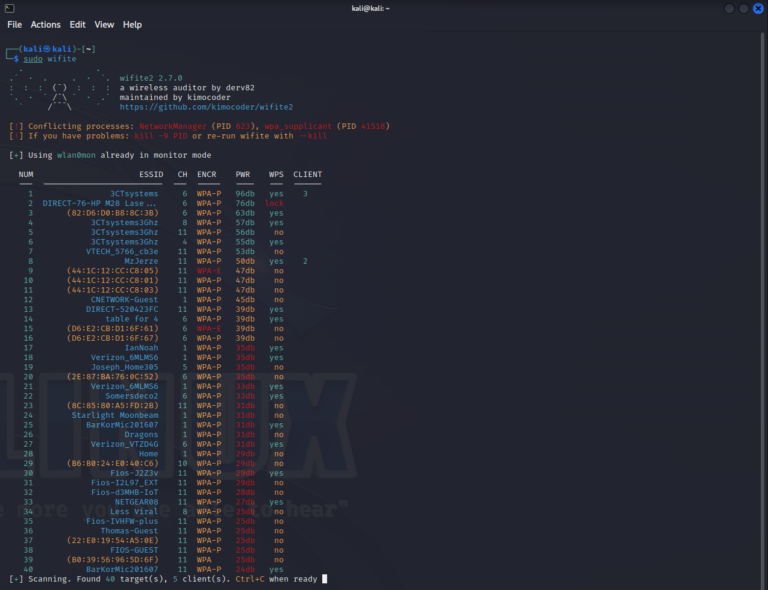
Mastering Wireless Security: An In-Depth Guide to Cracking WEP and WPA Protocols (Wifite)
Introduction to Wifite Wifite is an automated wireless attack tool, widely used in the cybersecurity industry. It simplifies the process of testing wireless networks by automating the tasks involved in a wireless attack. This tool is particularly useful for IT professionals and cybersecurity enthusiasts who need to ensure the security of wireless networks. Key Features of Wifite Automated Wireless Attack: Automates various wireless network attacks. Multiple Attack Modes: Supports WEP, WPA, and WPS encrypted networks. User-Friendly Interface: Simplified interface for ease of use. Installation of Wifite To use Wifite, you must have a Linux-based operating system, preferably Kali Linux, as it comes pre-equipped with the necessary wireless testing tools. Step 1: Update System Repository sudo apt-get update Step 2: Installing
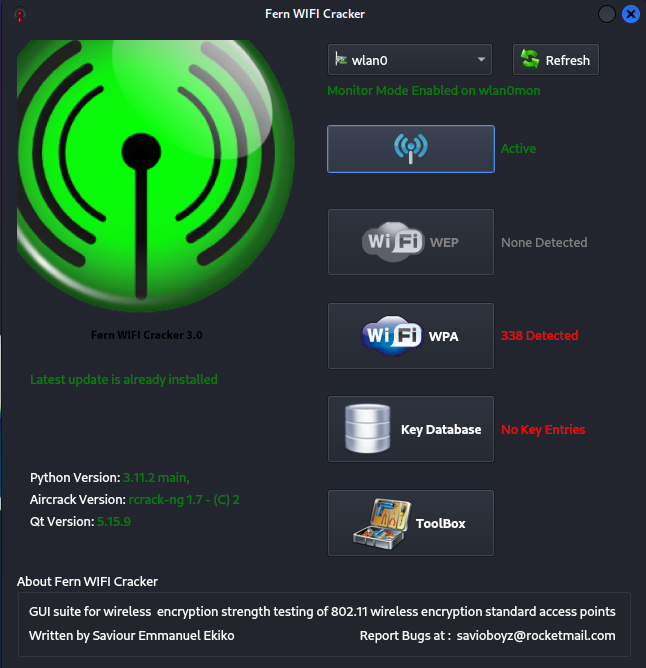
Mastering Wireless Security: An In-Depth Guide to Cracking WEP and WPA Protocols (Fern)
Introduction Cybersecurity, professionals are constantly in search of robust tools that can help them evaluate the security of Wi-Fi networks. Fern Wi-Fi Cracker emerges as a powerful and user-friendly solution designed for network security auditing and penetration testing. Unveiling Fern Wi-Fi Cracker Fern is a free, open-source Wi-Fi analyzer that runs on a variety of platforms. With its graphical user interface, Fern makes it straightforward for IT security analysts to conduct advanced wireless assessments. Unlike some of its command-line counterparts, Fern simplifies the process of detecting and exploiting vulnerabilities within the Wi-Fi network infrastructure. Core Features of Fern Fern is renowned for its ability to crack and recover WEP/WPA/WPS keys. It automatically runs reconnaissance to identify the active WEP, WPA,

Securing Big Data: Challenges and Strategies in the Age of Information Overload.
Key Takeaway: Securing big data is crucial in the age of information overload: With the increasing volume and variety of data being generated, it is essential to prioritize the security of big data to protect sensitive information and prevent potential breaches. Challenges of big data security include vulnerability of newer technologies, variable impact of security breaches, unauthorized access, the need for beyond routine audits, and the importance of constant updates to stay ahead of emerging threats. Strategies for big data security involve the use of encryption to protect data at rest and in transit and implementing centralized key management systems to ensure secure access and control. These strategies play a crucial role in safeguarding sensitive information and maintaining data integrity.

Reverse Engineering Malicious Binaries: Tools, Techniques, and Procedures.
Introduction Reverse engineering is the art of dissecting software to understand its inner workings, primarily when documentation is absent. For cybersecurity professionals, reverse engineering malicious binaries is crucial for determining the functionality, origin, and potential impact of malware. This article delves into the tools, techniques, and procedures of reverse engineering malicious binaries. Why Reverse Engineer Malicious Binaries? In the vast expanse of the cybersecurity landscape, malicious binaries often represent concealed weapons in the arsenal of cyber adversaries. These binaries, when executed, can wreak havoc, compromising systems, stealing sensitive information, or recruiting compromised devices into a botnet. So, the question arises: Why is it essential to reverse engineer these insidious digital entities? Uncovering Malware Functionalities and Behaviors: Depth of Insight: Beyond

Building a Robust Incident Response Playbook: Step-by-Step Guidelines for Organizations.
Incident Response Playbook Incident response playbooks provide organizations with a structured approach to effectively handle and respond to security incidents. By following these step-by-step guidelines, organizations can establish a comprehensive incident response process that ensures quick detection, containment, investigation, and mitigation of incidents. This playbook covers all stages of the incident response lifecycle, from preparation to continuous improvement, and emphasizes the importance of communication, collaboration, and learning from each incident Step 1: Preparing for Incidents Establish an Incident Response Team (IRT) consisting of key stakeholders from various departments, such as IT, legal, HR, and communications. Ensure that the team is equipped with the necessary skills and expertise to handle different types of incidents. Develop a comprehensive incident response plan that

Insider Threats: Detection, Mitigation, and the Human Factor in Security.
Introduction Insider threats pose a significant risk to an organization’s cybersecurity, making it crucial to understand, detect, and mitigate these threats effectively. Insider threats refer to the potential harm and breaches that can be caused by trusted individuals within an organization, such as employees or contractors, who have authorized access to sensitive data and systems. The human factor plays a crucial role in these threats, making it necessary to address not only technical vulnerabilities but also the behavioral aspects of security. It is essential to identify the different types of insider threats to develop appropriate security measures. These can include malicious insiders with intent to harm the organization, negligent employees who unknowingly cause breaches, and compromised insiders whose access has

Risk Management in Cybersecurity: From Assessment to Mitigation Strategies.
Introduction Cybersecurity risk management plays a vital role in protecting organizations and individuals from the ever-growing threat of cyberattacks. It involves assessing and mitigating potential risks to ensure the confidentiality, integrity, and availability of sensitive information. In a comprehensive article, we walk through the process of risk management in cybersecurity and explore in detail, from assessment to mitigation strategies. Risk management is crucial in cybersecurity due to the constantly evolving landscape of cyber threats. It enables organizations to identify and prioritize potential risks, allocate resources effectively, and implement necessary controls to reduce vulnerabilities and protect valuable assets. The steps involved in risk management in cybersecurity are as follows: Risk Assessment: This involves evaluating the likelihood and impact of potential risks

Digital Security for SMBs: Tailoring Solutions for Small and Medium-Sized Businesses.
Introduction Small and medium-sized businesses (SMBs) face unique challenges when it comes to digital security. With the rise in cyber threats, it’s crucial for SMBs to implement solutions tailored to their specific needs and budgets. Digital security for SMBs involves more than just protecting sensitive data; it also requires identifying vulnerabilities, implementing robust security measures, and educating staff on best practices. By doing so, SMBs can safeguard their networks against potential breaches and ensure business continuity. Understanding the Risks SMBs need to be aware of the risks associated with digital security. Cyberattacks, data breaches, and malware infections are just a few of the potential threats. The consequences extend beyond financial losses to include damage to reputation, loss of customer trust,

Exploiting and Securing Virtualization: From VM Escape to Container Vulnerabilities.
Exploiting and Securing Virtualization: From VM Escape to Container Vulnerabilities Introduction Virtualization technology has become a cornerstone of modern IT infrastructures, enabling organizations to efficiently manage resources, improve scalability, and isolate applications. However, as with any technology, virtualization comes with its own set of security concerns. This blog post will delve into some of the key vulnerabilities that plague virtualized environments, specifically focusing on VM (Virtual Machine) escape techniques and container vulnerabilities. We will also explore best practices and technologies that can help secure your virtualized assets. VM Escape: Breaking the Hypervisor Barrier What is VM Escape? VM escape is a security exploit that allows an attacker to break out of a virtual machine and interact with the host system.