

Security incidents are not a question of whether but when. Organizations of every size contend with unauthorized access attempts, malware infections, and data breaches, and the difference between a contained event and a business-altering breach usually comes down to two things: how quickly the incident is detected and how disciplined the response is. This guide covers the essentials of security incident management — recognizing what counts as an incident, building detection that surfaces threats early, running a structured response, and applying a step-by-step checklist you can put to work today.
Fast detection without a practiced response plan buys time but not control; a great plan without detection never gets a chance to run.
Understanding Security Incidents
A security event is any observable occurrence in a system or network. A security incident is an event that violates security policy, compromises the confidentiality, integrity, or availability of systems or data, or signals an active threat. Not every alert is an incident, but every incident deserves a structured response.
Incidents you should prepare for include:
- Unauthorized access — stolen credentials, account takeover, or access beyond an employee’s role.
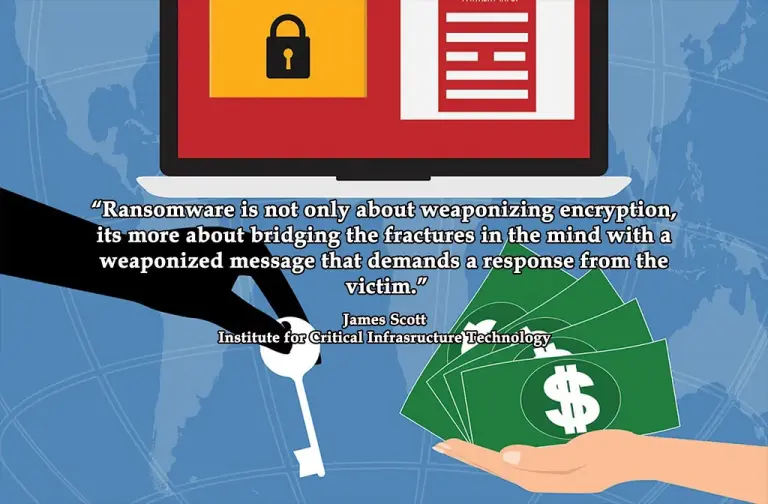
- Malware and ransomware — infections that encrypt files, steal data, or establish persistence on systems.
- Data breaches and exfiltration — sensitive information leaving the organization without authorization.
- Denial of service — attacks that make services unavailable to users or customers.
- Insider misuse — deliberate or accidental harm caused by employees or contractors.
- Misconfiguration — exposed storage buckets, open administrative interfaces, or disabled security controls.
Classify severity early — for example, low, medium, high, or critical, based on data sensitivity, scope, and business impact. Severity determines how quickly you escalate and how many resources you commit, so define the criteria in advance rather than inventing them mid-crisis.
Building Detection That Surfaces Threats Early
Many breaches are discovered days or weeks after an attacker first gains access. Shrinking that window is the highest-leverage improvement in incident management, and it starts with visibility:
- Centralized logging — ship logs from endpoints, servers, network devices, and cloud services to one searchable location with consistent timestamps.
- Correlation and alerting — a SIEM platform correlates events across sources and turns patterns into alerts.
- Endpoint and network visibility — endpoint detection and response (EDR) tools flag suspicious process behavior, while intrusion detection systems watch network traffic for known-bad activity.
- Baselines — knowing what normal looks like on your systems makes abnormal behavior stand out.
Detection tools are only as useful as their tuning. Alert fatigue sets in when analysts are flooded with low-fidelity alerts, and real incidents get buried. Review alert volume regularly, adjust thresholds, and make sure every alert has a defined owner and response path. Decide which events are severe enough to page someone in the middle of the night and which can wait for the next business day.
Simple log checks still catch plenty of attacks. Failed logon floods and brute-force attempts are visible in standard event logs:
# Windows: recent failed logons (Event ID 4625)
Get-WinEvent -FilterHashtable @{LogName='Security'; Id=4625} -MaxEvents 50

# Linux: failed SSH attempts
grep 'Failed password' /var/log/auth.log | tail -50
The Incident Response Lifecycle
Widely adopted frameworks such as NIST SP 800-61 break incident response into phases: preparation, detection and analysis, containment, eradication, recovery, and post-incident activity. In practice, the cycle is iterative — you contain a system, discover the scope is larger than expected, and contain again.
Preparation is the phase that pays for itself. A written, tested incident response playbook removes improvisation from the worst possible moment. Assign roles in advance: an incident commander who owns decisions, a lead investigator for technical forensics, a communications coordinator for internal and external updates, and a scribe who documents everything. Run tabletop exercises at least once a year — walk the team through a realistic scenario without touching production systems, and capture everything that broke.
Containment and Eradication Without Making Things Worse
Containment is a trade-off between stopping damage and preserving evidence. Disconnecting a compromised server from the network is fast, but powering it off destroys volatile evidence in memory. Match your containment strategy to the incident: for ransomware, stopping the spread usually outweighs forensics, while a suspected insider threat may call for quiet monitoring before action.
- Isolate affected systems at the network level rather than powering them down.
- Disable compromised accounts and force credential rotation for affected users.
- Block attacker infrastructure at the firewall and DNS layer.
- Capture memory, disk images, and logs before remediation changes them — tools such as Velociraptor are purpose-built for this work.
Eradication means removing the attacker’s foothold, not just the obvious symptom. Delete malware and persistence mechanisms, close the entry point — typically by patching the exploited vulnerability — and reset credentials broadly. For severe compromises, rebuild affected systems from known-good media. Verify the adversary is gone before declaring recovery, and monitor the environment for signs of re-entry.
Communication and Escalation
Decide escalation paths before you need them. Write down who can declare an incident, who is notified at each severity level, and who approves external communications. During an active compromise, use out-of-band channels for sensitive discussion — the attacker may be reading your email if the mail system is affected.
Involve legal counsel early. Breach-notification obligations vary by jurisdiction and industry, and regulators, customers, insurers, and law enforcement each have distinct requirements and timelines. Share verified facts internally on a regular cadence, and never speculate publicly about causes, attribution, or impact that has not been confirmed.
Practical Guidance: A Step-by-Step Response Checklist
Much of a successful response is decided before anything goes wrong. Keep the following ready, then work the checklist in order when an alert fires.
What to prepare in advance
- A contact list with names, roles, and phone numbers for the response team, executives, legal counsel, and your insurer.
- Pre-approved containment actions for the systems you depend on most.
- Known-good backup and restore procedures that have been tested recently.
- Communication templates for notifying leadership, customers, and regulators.
When an alert fires
- Triage and confirm — validate that the alert is real, then determine scope: which systems, accounts, and data are affected.
- Declare severity and activate the plan — appoint an incident commander and open the incident log.
- Preserve evidence — record timestamps, capture memory and logs, and image affected systems before remediation.
- Contain — isolate systems, disable accounts, and block attacker infrastructure at the scope the incident commander approves.
- Eradicate — remove malware and persistence mechanisms, close the entry point, and reset credentials.
- Recover — restore from known-good backups, verify services, and monitor for recurrence.
- Document — maintain a timeline of who did what and when, along with the evidence collected.
- Review — hold an after-action meeting, update playbooks and detection rules, and fix the gaps the incident exposed.
Conclusion
Strong incident management is built in calm moments and exercised under pressure. Classify incidents clearly, invest in detection that produces timely and accurate alerts, follow a disciplined lifecycle, and practice the steps in this checklist. Test the plan before you need it — and improve it after every incident, real or simulated.